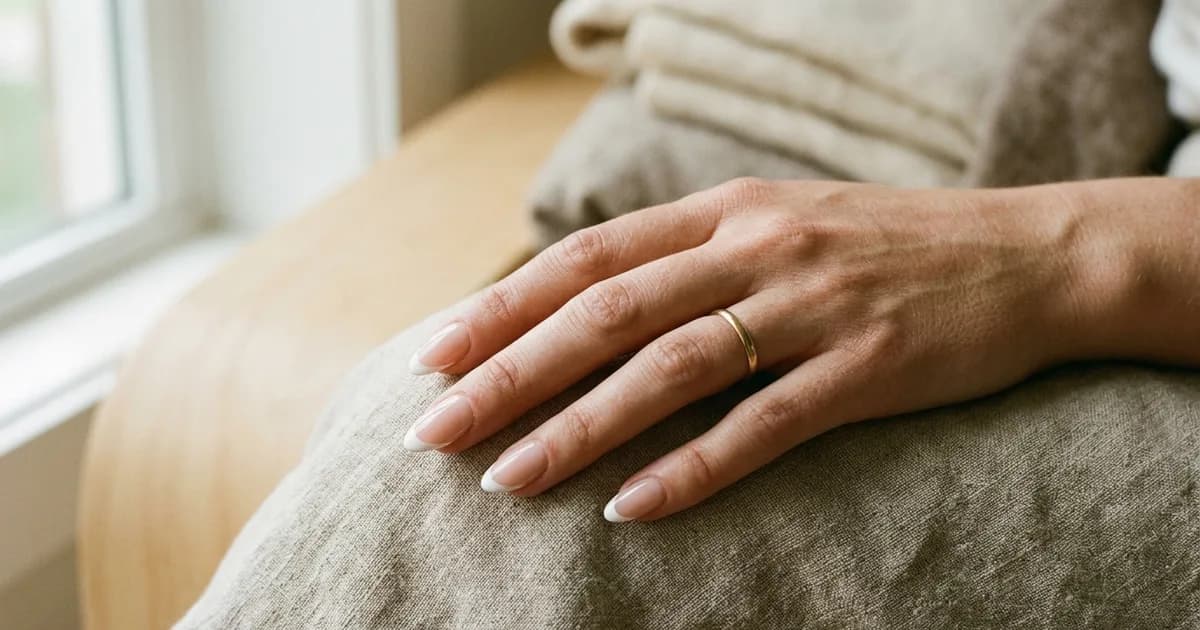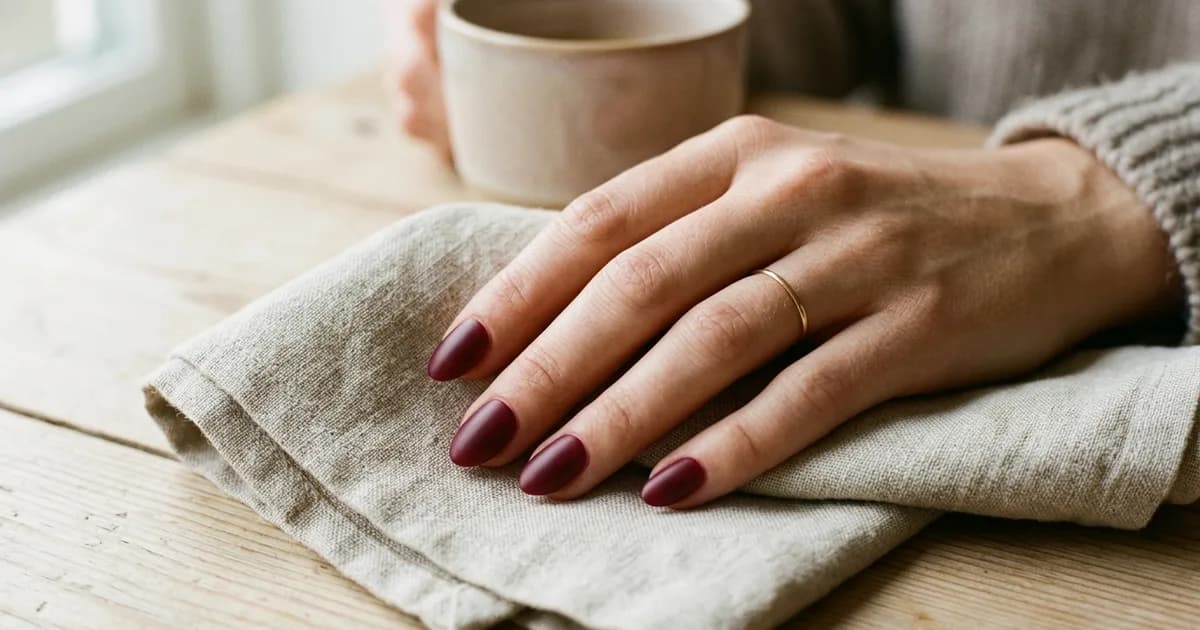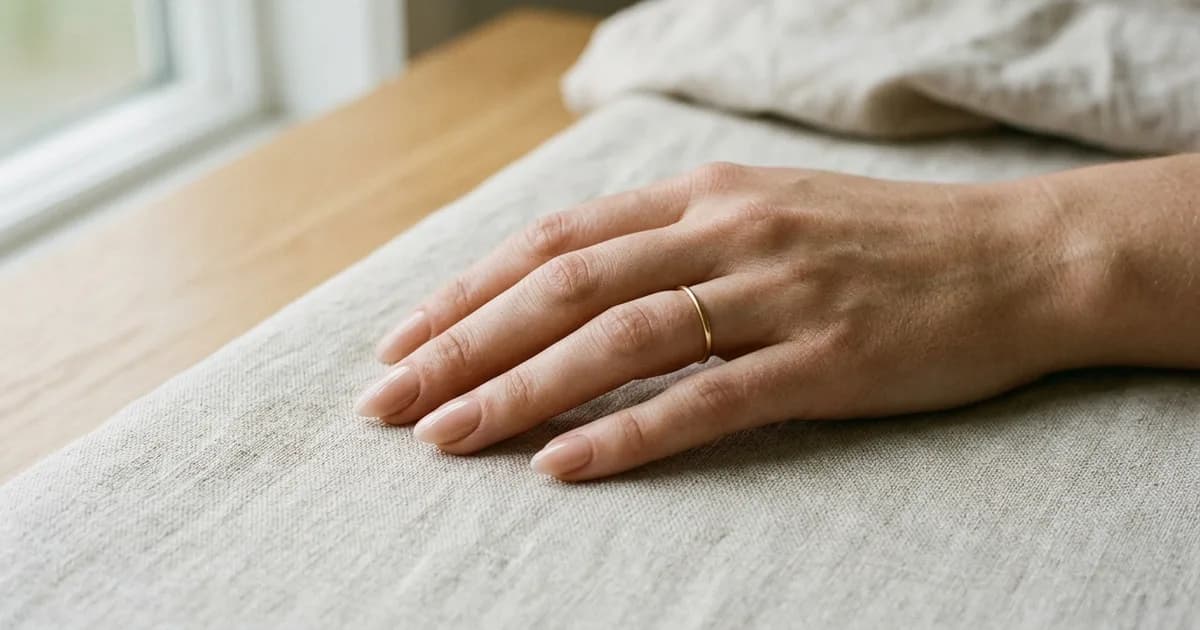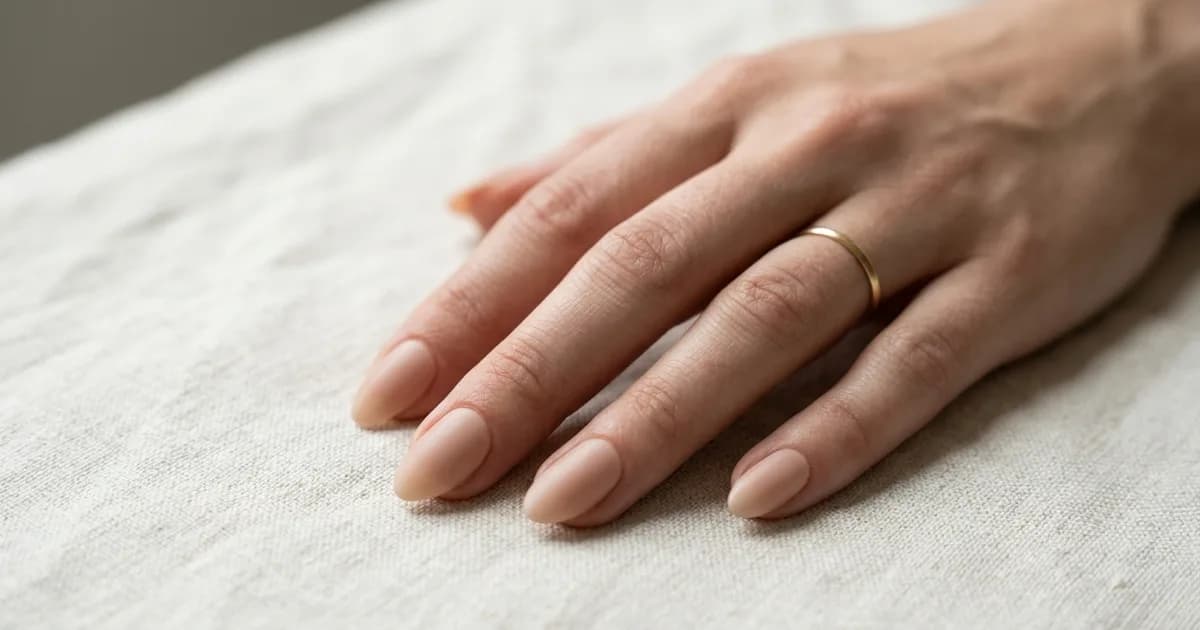
Almond-shaped press-on nails are the shape that sits between the round and the pointed, with a soft, rounded tip that makes the fingers look longer. It suits almost every hand, which is probably why so many people land on this one. The nice thing about getting the shape as a press-on is that the tip comes ready-formed, without filing your own nail narrow at the sides. For me that is the whole difference, because an almond filed onto a short natural nail is often weaker than it looks.
Most guides about almond nails are about filing your own nail into the shape. This one is about getting the look with a set, which hand it suits, and how short you can go before the almond stops reading as an almond. It is also about how the nail underneath is doing when the set eventually comes off.
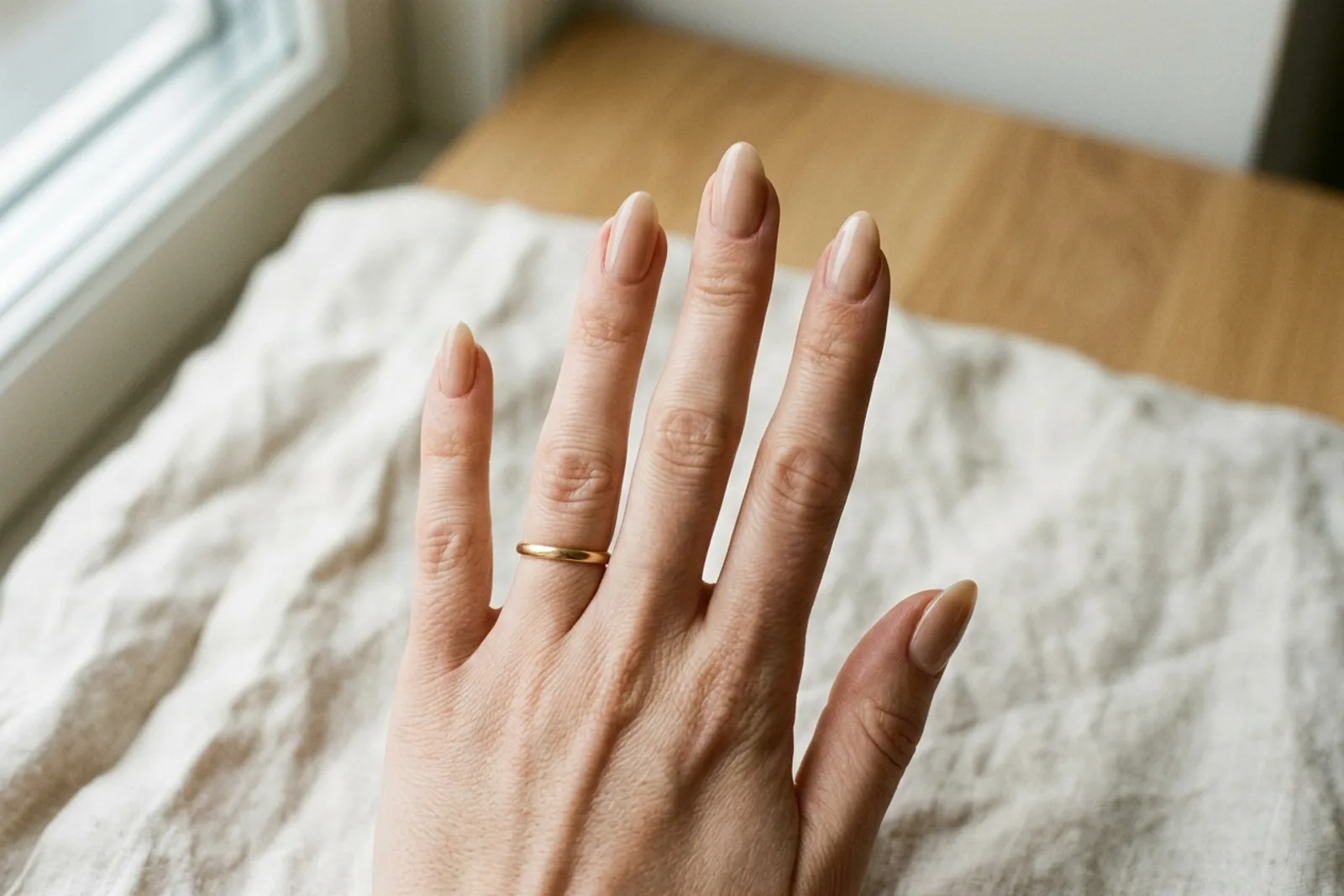
Who the almond shape suits best
The almond shape suits nearly every hand, and short or slightly broad fingers most of all, because the rounded tip lengthens the finger visually. If you have a narrow nail bed or a nail that is almost as wide as it is long, the almond softens the whole hand.
The big practical advantage is that it takes more than the pointed stiletto. The sides are not filed in as far, so the shape breaks less often when you type, shop and live an ordinary day. If you want a little length without the drama, almond is usually a safer choice than stiletto or a long square.
What it does not do is fully hide a very short fingernail. The shape gives the illusion of length, but an extremely short natural nail sets a limit on how clear the tip can be. Worth knowing before you order, so you pick a length that actually suits your hand rather than one you saw in a photo.
Almond shape without filing the natural nail
To file your own nail into an almond, you have to file the sides in towards the tip, and the sides are exactly where the nail gets much of its strength. File them in too far, especially on a short nail, and you take away some of the support and end up with a shape that looks lovely but gives more easily under pressure and knocks.
A press-on set skips that whole problem. The shape is already moulded into the nail you glue on, so you get the almond tip without touching the edges of your own nail. The natural nail keeps its full width and bends instead of snapping, and the only job you do on it is wiping it clean and letting it dry fully before you glue.
That is really why I like almond as a press-on more than as a filed shape. You get the look that is hardest to file safely yourself, without paying for it with the nail underneath. But how is the nail doing afterwards? That still depends most on how you take the set off, not on the shape on top.

How short an almond can be
Shorter than you think, and that is good news for everyday life. An almond needs a little length for the tip to show, but on a press-on set that length is built in, so even a short almond reads clearly as an almond. You do not have to go long to get the shape.
A short to medium almond is the one I reach for when a set has to last a week of keyboards, dishes and everything ordinary. It looks finished and elegant, but it does not catch in a sweater or lever off when you pull up a zip. If you want a shape that survives your life, this is the length I would choose.
Go for a long almond and the tip gets narrower and prettier, but also more exposed. The longer and narrower the tip, the more weight lands right at the end, and the more easily you notice it if you are rough with your hands. There is nothing wrong with choosing length, you just want to know that length costs a little robustness.
How to pick size and length
The right size matters more for both the look and the wear than the shape itself does. An almond that is too wide looks bulky at the cuticle and lifts first at the corners, while one that is too narrow leaves a strip of your own nail down the sides. Measure the width of each nail before you order, and pick the size that covers the nail bed rather than the one that is a touch too big.
If you have never measured before, I go through how you find the right size and a length that survives an ordinary day in a post of its own. It applies just as much to almond as it does to a short square. The application itself, from clean nail to finished set, is in our guide to press-on nails.
If you are looking for a set to start with, a nude almond in a short to medium length is the one I would begin with myself. It is easy to style, and it forgives a slightly uneven natural nail length underneath. We run the xnails.no shop ourselves, so you know where the recommendation comes from, and that set is a calm nude almond that suits most skin tones.
Questions we get about almond-shaped nails
Does almond suit short nails? Yes, on a press-on set it does, because the length and the tip are in the set and not in your own nail. If your natural nails are very short, pick a short to medium almond, so the tip shows without the set being too long for the nail underneath.
Do almond nails break easily? Less often than the pointed stiletto, because the sides are not filed in as narrow. A short to medium almond takes an ordinary day fine. Go for a long, narrow tip and more weight lands at the end, and then you notice it more easily if you are rough with your hands.
How is the natural nail doing under an almond set? Fine, as long as you do not file the surface before gluing and do not pull the set off. The nail keeps its full width under a press-on almond, and what wears it is rough removal, not the shape. Give it a little oil in the evening and a couple of days with nothing on between sets. What the nail needs between two sets is mostly moisture and a little calm.